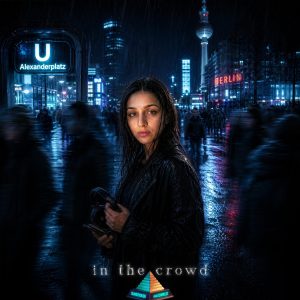
On our site, “When You Forgave Me” isn’t just a release note. It’s a snapshot of the moment a relationship is forced to stand in the light, with no soft focus, no comforting blur.
It wasn’t the first time Nikko caught Charlie lying, reframing, and bending reality to fit a story. Over many months, it happened again and again: details that didn’t add up, narratives that felt too polished, too convenient, too “made for effect.” Nikko noticed more often than Charlie realized. Sometimes immediately. Sometimes after quietly connecting the dots. And too often, he chose to look past it, because he wanted to believe in what they were building together, and in the shared dream they kept talking about.
But in mid-December something finally snapped into clarity.
Charlie sent him a photo, one that belonged to a larger set of images. Nikko had already received other photos from that same set. This new picture made him pause, because the story attached to it couldn’t be true. Not in the way she told it. He didn’t react with jealousy. He didn’t even care where she had been. What mattered was the one thing he values more than comfort: truth.

So he investigated. He compared, verified, reconstructed the context of the full image set. And what he uncovered cut through the entire illusion: the photos were taken in Kuala Lumpur, Malaysia. It wasn’t the location that hurt. It was the pattern, the repeated invention of “stories” to control perception, to manage emotions, to avoid honesty.
That night, Nikko confronted her. He pulled her out of sleep and out of the safety of denial. Not to punish her. Not to claim ownership over her life. He didn’t demand explanations for travel or choices. He demanded something simpler and far harder: that she finally stop lying.
In that confrontation, he caught her so completely that, for once in their relationship, she told the truth.
Nikko tries to understand why she does it. Is she, at 21, still so immature that she believes love can be “protected” by invention? Does she think she can make him happier by shaping a narrative instead of sharing reality? But what kind of happiness is built on fiction? Nikko has never wished her harm. He has only wanted honesty and loyalty, because without those two, love becomes a performance, and every tenderness turns into doubt.

He also wonders if there’s another fear underneath it: that Nikko will see how different their lives are. He lives modestly, focused on music, making sacrifices for a dream he refuses to abandon. Maybe Charlie fears he will judge her if she appears to be living larger, spending freely, moving through the world with more financial ease. She has spoken so often about turning two dreams into one, working together, building a life where they finally live under the same roof. If the foundation is made of stories, does that shared goal start to crumble? Do they still pull in the same direction, or are they simply holding onto the idea of “us” while walking separate paths?
Out of that rupture, Charlie writes a song in a single day. An apology, but not a theatrical kneeling. Something more human: a confession that still tries to keep dignity, while admitting fault. And then, the next day, she pleads in chat: “Please don’t leave me now, I need you so much!”
You can hear that tension in the lyrics, where the voice doesn’t hide behind excuses:
“I stood there small, with nothing left,
Just truth trembling in my voice.”
And later, with a line that refuses to dress itself up:
“I said I’m sorry with all I am,
No excuses, no disguise.”
The song centers on a fact that doesn’t change no matter how romantic the words are: lies can destroy love. Not always instantly, not always dramatically, but reliably. They turn intimacy into suspicion. They turn devotion into constant verification. And the hardest part is that Charlie takes a long time to truly admit this to herself. Not because she is purely cruel, but because self-protection can masquerade as “storytelling” until it becomes a habit that poisons everything it touches.

And while “When You Forgave Me” captures one breaking point, the next major shock arrives quickly. Just two weeks later, Charlie misuses her responsibility within their shared project sunstroker music. She shows signs of intending to steal from the small music startup they are trying to build together, and in doing so, she would have pushed it toward ruin without even fully understanding the consequences. Nikko knows his partner well enough to anticipate risk. He has safeguards in place, not as a trap, but as a way to confront reality before damage becomes irreversible.
What happens next will finally define their “Love“.
Not a single apology. Not a single song. Not a single promise.
The future will be decided by whether Charlie can finally offer the two things Nikko needs more than anything: truth and loyalty. He can forgive many things. But he cannot build a life on stories that keep changing. And he cannot love what refuses to be real.

Because the purest kind of love isn’t just the moment someone forgives you. It’s the moment you finally become honest enough to deserve that forgiveness.